Line-ups
Nigeria
Formation: 1-4-4-2
Starting Eleven: 1 Maduka Okoye, — 12 Abdullahi Shehu, 22 Kenneth Omeruo, 20 Chidozie Awaziem, 3 Jamilu Collins, — 15 Moses Simon (Henry Onyekuru 73’), 13 Bonke Innocent, 14 Kingsley Michael, 8 Chidera Ejuke (Zaidu Sanusi 84’), — 7 Ahmed Musa (Captain) (Terem Moffi 73’), 9 Victor Osimhen (Paul Onuachu 84’)
Substitutes: 2 Adeleke Adekunle, 16 Daniel Akpeyi, 23 Francis Uzoho, 11 Henry Onyekuru, 19 Paul Onuachu, 18 Terem Moffi, 6 Valentine Ozornwafor, 4 Zaidu Sanusi
Cape Verde
Formation: 1-5-2-3
Starting Eleven: 1 Vozinha, 4 Carlos Ponck, 16 Dylan Tavares, 14 Kelvin Pires, 3 Roberto Lopes, 22 Steve Furtado, 10 Jamiro Monteiro, 18 Kenny Santos, 7 Patrick Andrade, 11 Garry Rodrigues, 20 Ryan Mendes
Substitutes: 13 Claudio Tavares, 23 Dylan Silva, 2 Henrique, 19 Julio Tavarès, 5 Kevin Pina, 8 Lorenzo Soares Fonseca, 12 Marcio, 6 Marco Soares, 17 Telmo Arcanjo, 15 Vagner, 21 Vasco Lopes, 9 Willis Furtado

On Tuesday, the Super Eagles travelled to Cape Verde to play their second World Cup 2022 Qualification match at the Estadio Municipal Aderito Sena. Despite several personnel changes and an underwhelming performance, they were able to come away with a 2-1 victory. Two major errors from Cape Verde saw Nigeria come back from 1-0 deficit (a goal that was caused by an error of their own).
Tactics
System and Personnel Changes
While the Super Eagles maintained their 1-4-4-2 formation from their previous qualifying match against Liberia, Tuesday’s match saw Nigeria makes several personnel changes, leaving out many of the team’s usual starters. Much of this was due to Covid-19 guidelines held by the U.K which had Cape Verde as one of its red-listed countries. As a result of this, many Nigerian players had to make an early return.
Below are the changes that were made:
In the centre-back positions, a partnership of Kenneth Omeruo and Chidozie Awaziem was used in place of the two main starters, Leon Balogun and Troost-Ekong.
Abdullahi Shehu came in for Ola Aina.
A new midfield pairing was also used. The two debutants Bonke Innocent and Kingsley Michael replaced Ndidi and Aribo.
Chidera Ejuke started in the place of Alex Iwobi.
Ahmed Musa started for Kelechi Iheanacho.

Open Play
So many personnel changes meant that it would naturally be difficult for Nigeria to use the exact same tactics to its same standards, and this was very noticeable during the match. While Nigeria usually play a combination of a direct and indirect style of play, yesterday saw them lean more towards a direct style of play, especially during the second half of the match.
The centre-backs often looked for the direct ball to Osimhen and Musa, and if that could not be played, they would go through the debutant Bonke Inoccenct in central midfield. He was usually the first to receive the first pass in the middle third.
Throughout the match, it was also rare for any pass to move from the middle third to the attacking third. Any transition of the ball from midfield to the attack would usually be through flank players Moses Simon and Ejuke carrying the ball.
This pattern of the midfield being cut out of the game was most likely due to the lack of creative players on the team. Since there was no player on the field to make the dangerous final pass (such as Iwobi or Iheanacho), Osimhen and Musa, only relied on long balls or crosses from wingers.
When it came to the fullbacks attacking, Collins had more licence to join the attack.
From a defensive point of view, Shehu stayed further back. This was most likely to maintain a bit of caution in an away match and to also not get disorganised. Nigeria also played a mid block, and did not press the Cape Verdean defenders much.
Set-Pieces
Corners from the right side of the pitch were taken by Simon Moses, and corners from the left were taken by Ahmed Musa.
On some occasions, the super Eagles opted for the long throw (like in the previous match) from the side of Collins. This seems like something that Nigeria sees as a good option going forward.
Goal kicks were usually taken long unless there was no pressure from the opposition, where in such cases they would try to play out of the back.
Substitutions
In the 73rd minute, Terem Moffi came on for Ahmed Musa and Henry Onyekuru came on for Moses Simon. This was an attempt to refreshen the attack and to try to get the winning goal for Nigeria.
In the 84th minute, Paul Onuachu came on for Victor Osimhen and Zaidu Sanusi came on for Ejuke, the latter being to give the team more defensive solidity in an attempt to maintain the lead.

Offensive and Defensive Positioning
This was one of the more rigid tactical displays for Nigeria in terms of positioning. As it was a squad full of changes, it made sense to focus extra on organisation. Offensively, the flank players were direct and stayed wide, the central midfielders did not leave their positions or attempt to join the attack too much, Musa dropped back once in a while and pulled wide on some occasions but it was nothing compared to what Iheanacho would usually do. Collins had some licence to go forward, but other than that the team were very fixed in their positioning as whole.
Defensively, all players would drop behind the ball whenever out of possession, and only Osimhen would stay high to relieve pressure and help counter.
Team Performance
The team’s performance lacked any kind of fluidity, as whenever they could not find their way out of tight situation they would just play a long ball to Osimhen or Musa, with many of the passes not even hitting their target.
Aside from the inconsistent and inaccurate passes that took place for Nigeria throughout the game, they also struggled to beat the opposition 1v1 on several occasions. This was primarily the case with Ejuke who gave away possession on several instances. All of this made it difficult for Nigeria to create chances.
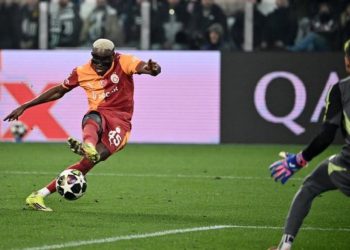
One of the few chances that they did create came from Collins in the 30th minute which led to a mis-kick from Cape Verde’s Kelvin Pires which fortuitously fell into the path of Osimhen, who then put it in the back of the net.
The winning goal was another stroke of luck as Cape Verde’s Kenny Santos overhit a lobbed back pass that went directly into his own goal in the 76th minute.
In the beginning of the second half, Nigeria lost grip of the game and Cape Verde started having more possession. The likes of Ndidi, Iwobi and Aribo missing was clearly evident.
Defensively, Nigeria made costly errors of their own which put Cape Verde in the lead in the 19th minute of the match. The right back, Shehu, was caught out of position after a diagonal pass was made to Dylan Taveras of Cape Verde. Simon Moses tried cover for Shehu, but he could not get to the Cape Verdean attacker before he fired a shot into the near post, which was compounded by another error from Okoye—he did not cover his near post. Outside of this, the defence did a good job overall for the rest of the match.
The disjointed display aside, credit has to be given to Nigeria for coming back from 1 – 0, despite it being aided by the errors of Cape Verde.
Notable Individual Performances
Jamilu Collins
He put up a good and mature display. He showed great energy taking up both defensive and offensive responsibilities from his left back position. His cross led to the error, and subsequently, the goal for the Super Eagles in the 30th minute.
Ahmed Musa
While he did cover a lot of ground, he struggled to link with the midfield and to create any chances for himself or his team mates. The withdrawn striker role is a serious question mark from him.
Chidera Ejuke
While very skilled and fast, he still has some maturing to do in terms of learning when to release the ball and when to take on the opponent; he lost the ball unnecessarily far too many times during the match.
Kingsley Michael
He was very quiet throughout the game and was constantly cut out of transition from defence to attack. Bonke, the other central midfielder, was more visible during the match.
Maduka Okoye
This was a game where he was called upon during the two qualifying matches and he was unable to be well positioned for the save.
What We Learnt
Nigeria did not play to their best and were met with a lot fortune. However, it was an away victory with many of their starting players missing and a new center midfield paring. It was a hurdle that they felt they just needed to get over and they did.
It will be interesting to see the shape that the squad will take on the 9th of October against the Central African Republic.
By Adeyanju Abiodun