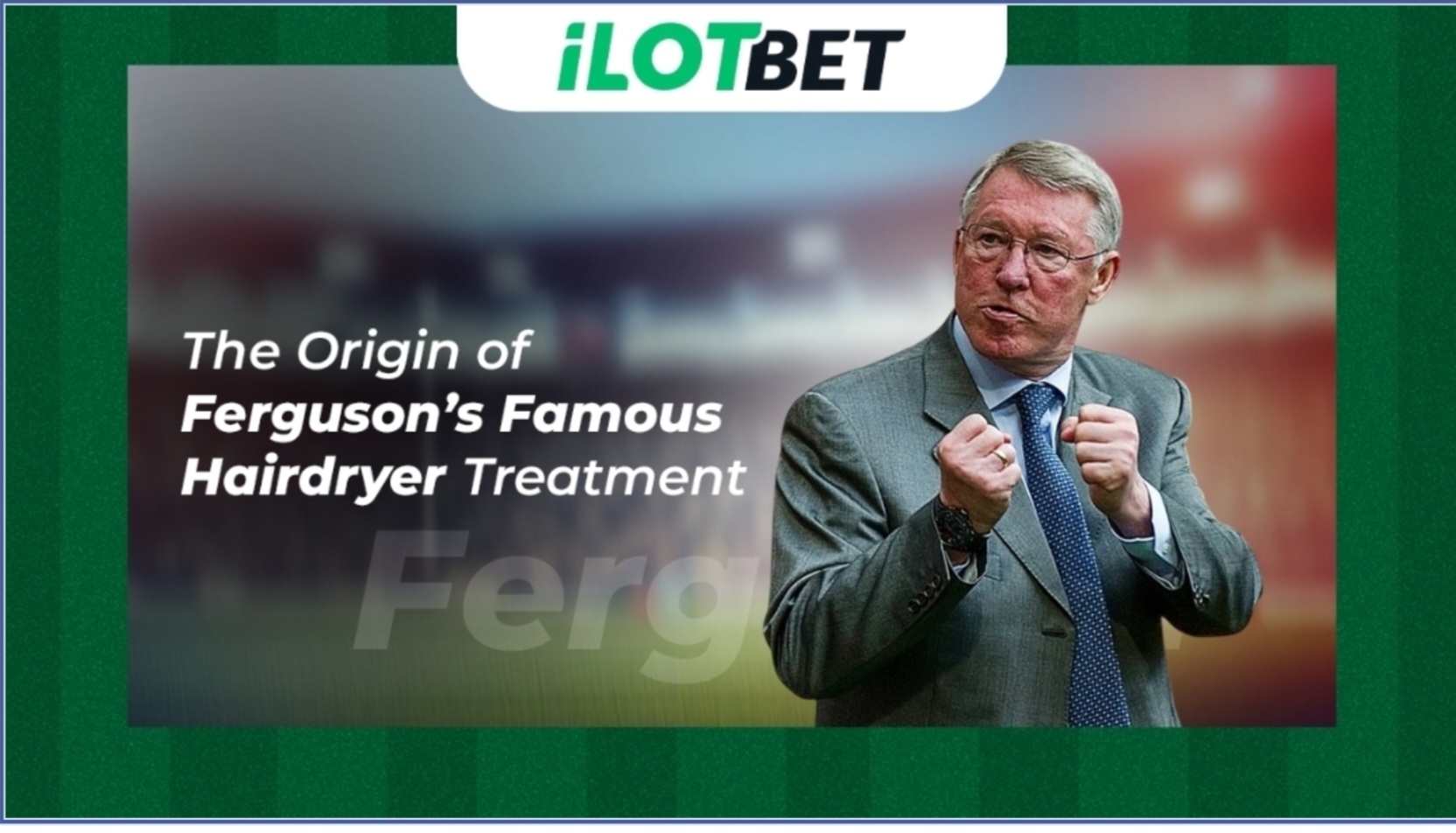
When a football manager loses his cool and unleashes a furious tirade on his players, fans often call it the “hairdryer treatment.” And no one in the history of the game has embodied this phrase more than Sir Alex Ferguson.
The Ferguson hairdryer has become one of football’s most iconic terms, tied forever to the former Manchester United boss. But what does it actually mean, and where did it come from? Let’s take a closer look at the origin of this unforgettable piece of football folklore.
What is the Ferguson Hairdryer?
The term “hairdryer treatment” is used to describe a blistering verbal blast from a football manager, delivered with such volume and intensity that it feels like a hairdryer blowing straight into your face.
In Ferguson’s case, it became his trademark method of shocking his players back into focus when he felt standards had slipped. Players often described the experience as terrifying. His face would turn red, his eyes would lock onto you, and his voice carried the kind of power that left no doubt about his anger.
It was never a daily occurrence, but when it happened, the message was clear. Ferguson wanted to remind his squad that wearing a Manchester United shirt meant responsibility, pride, and relentless effort.
How the Term Came About
The phrase itself began circulating in the early 1990s, a time when Manchester United were rising to dominance under Ferguson. Stories leaked from the dressing room about his explosive half-time speeches and post-match rants. Gary Neville later summed it up by saying that when Ferguson was angry, it felt like “your head was about to be blown off.” That colourful image captured the imagination of the press, and soon the world was talking about the “Ferguson hairdryer.”
From there, it spread far beyond Old Trafford, becoming a permanent part of football’s vocabulary whenever a manager let loose in the dressing room.
Famous Victims of the Ferguson Hairdryer
Some of the biggest stars in the game discovered first-hand what the Ferguson hairdryer felt like. David Beckham’s clash with the manager in 2003 is perhaps the most famous example. After a disappointing FA Cup defeat to Arsenal, Ferguson lost his temper and kicked a boot across the room. The flying boot struck Beckham above the eye, leaving a cut that became tabloid fodder for weeks. Ferguson later admitted it was born out of frustration at Beckham’s declining focus ahead of his move to Real Madrid.
Cristiano Ronaldo was another high-profile target in his younger years at United. While Ferguson admired his talent, he used the hairdryer to rein in Ronaldo’s selfish tendencies on the pitch. Looking back, Ronaldo himself admitted that those tough moments taught him the discipline and teamwork that would make him one of the greatest players of all time.
Even veterans like Roy Keane and Ryan Giggs were not immune. Keane once said that Ferguson could “go off like a shotgun” when he felt the team was not performing. Giggs confessed that the fear of being on the receiving end was enough to keep the dressing room focused and hungry for success.
Why It Worked for Ferguson
Plenty of managers have tried to rule with fear, only to lose the trust of their squads. Ferguson was different because his outbursts always had purpose. The hairdryer treatment was sharp, fiery, and unforgettable, but it was never constant. He used it sparingly, at moments when he needed to send a message that complacency would not be tolerated.
Just as importantly, Ferguson knew how to rebuild relationships quickly. After an outburst, he would often put an arm around the player, speak calmly, and remind them of their value to the team. That ability to combine fire with fairness was at the heart of his man-management genius.
Today, the phrase Ferguson hairdryer is part of football history. Whenever a manager is caught tearing into his squad, comparisons are instantly drawn to Sir Alex. It has become a lasting symbol of his relentless drive for standards, discipline, and excellence.
Though Ferguson retired in 2013, stories of his hairdryer moments are still told by former players and pundits. They serve as a reminder that Manchester United’s golden era was built not just on tactics and talent, but also on the unwavering authority of a manager who refused to accept anything less than the best.
If you want to channel that same winning mentality into your football predictions, join iLOTBET today and make every decision count.