


Nigeria’s latest football setbacks should no longer be treated as isolated disappointments. They are symptoms of a deeper problem that demands urgent and fundamental reform of the country’s football administration and development structure.
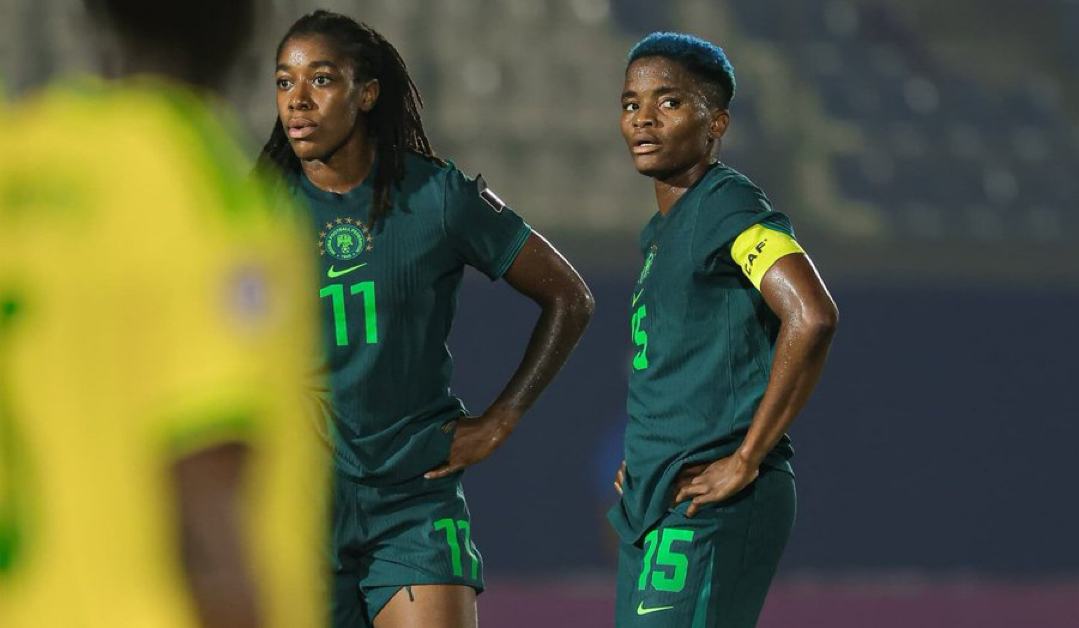
The failure of the Super Eagles to qualify for the 2026 FIFA World Cup was already a major warning. The recent failure of the Super Falcons to qualify for the 2027 Women’s World Cup has made the situation even more alarming.
For the first time, Nigeria will be absent from the Women’s World Cup, ending the Falcons’ remarkable record of appearing in every edition since the tournament began in 1991.
Even more disturbing is what is happening at the junior level. The Golden Eaglets, once the most successful team in FIFA U17 World Cup history with five titles, have suffered repeated qualification failures. The Flying Eagles and other youth teams have also struggled to maintain Nigeria’s traditional dominance.
This is not simply a problem of players or coaches. When the senior men’s team, senior women’s team and youth teams are all experiencing setbacks, it is difficult to argue that the problem is merely technical. It points to a system that is no longer producing the results expected from a country with Nigeria’s football pedigree.
Talent Is No Longer Enough
Nigeria has never lacked football talent. Every year, young Nigerians emerge from academies, schools, streets and local competitions with enormous potential. But talent without structure, planning and proper development will not produce sustained success.
Other African countries have demonstrated this clearly. Morocco, Senegal, South Africa, Ghana and others have increasingly invested in organised development structures, coaching education, scouting systems and football infrastructure.
Nigeria, meanwhile, appears too comfortable relying on individual brilliance and hoping that another generation of exceptional players will somehow rescue the national teams.
That approach has reached its limit.
The NFF Must Become a Development Institution
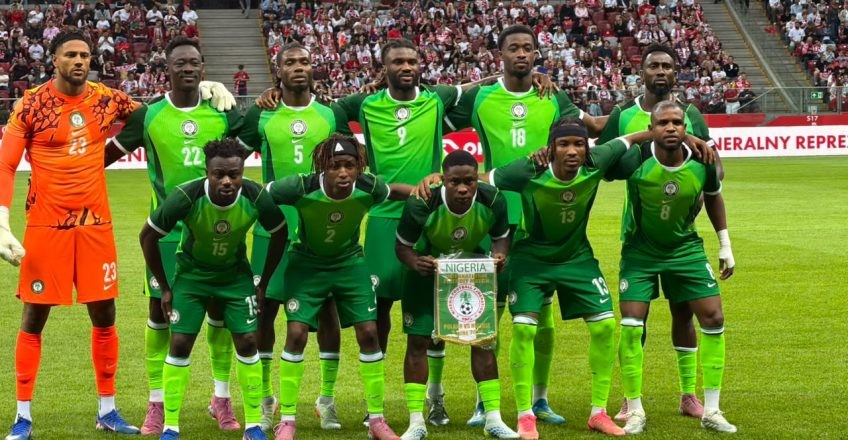
The Nigeria Football Federation cannot be viewed primarily as an organisation responsible for organising national-team camps, appointing coaches and preparing teams for tournaments. Its responsibility must be much broader.
Nigeria needs a comprehensive football development blueprint covering grassroots football, youth development, coaching, refereeing, women’s football, sports science, player welfare, domestic leagues and the national teams.
There must be a clear pathway from the U-13 and U-15 levels through the U17, U20 and U23 teams to the Super Eagles and Super Falcons.
The national teams should not operate as disconnected projects. A player selected for a junior national team should enter a development system with a clear technical philosophy, appropriate coaching and proper monitoring.
Recent calls for a sustainable development pathway, as well as concerns about political considerations in youth football, show that this issue has been recognised by stakeholders for some time.
Stop Changing Coaches Without Fixing the System
Nigeria has also developed a damaging culture of reacting to failure by changing coaches. A coach is appointed, expectations become unrealistic, a few poor results follow, pressure mounts, and the coach is replaced. Then the process begins again.
That is not a football development strategy.
What Nigeria needs is a long-term technical philosophy. Coaches should be given clear targets, adequate preparation time and professional support, while their performance should be objectively assessed.
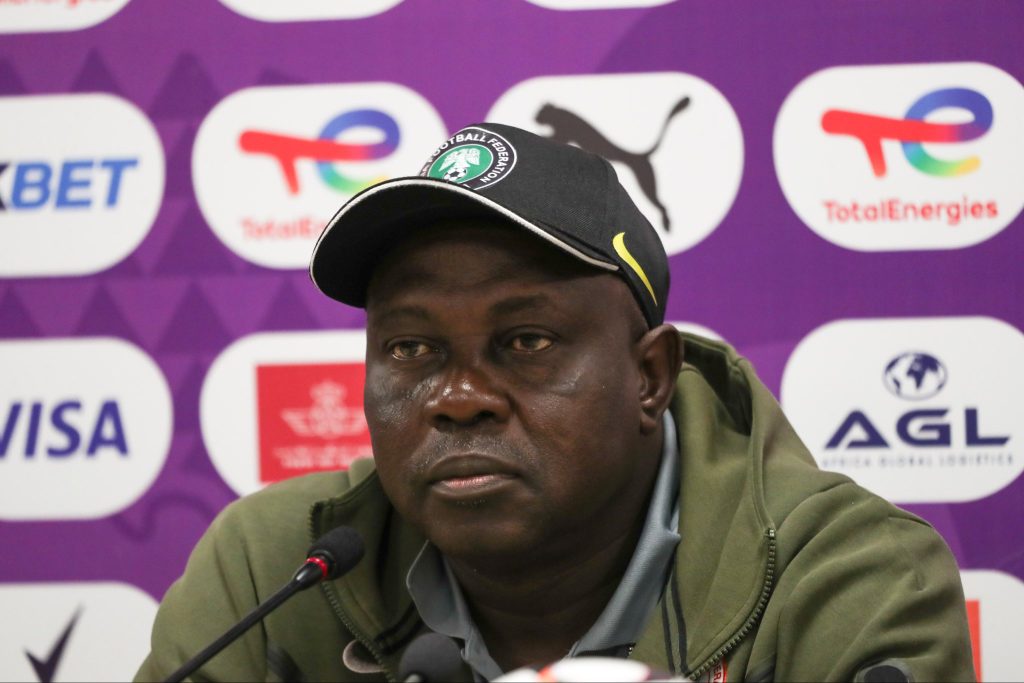
The reported decision to give Super Eagles coach Eric Chelle responsibility for the U-23 team could become useful if it is genuinely part of a coordinated, long-term technical programme rather than another administrative experiment.
Youth Football Requires a Complete Overhaul
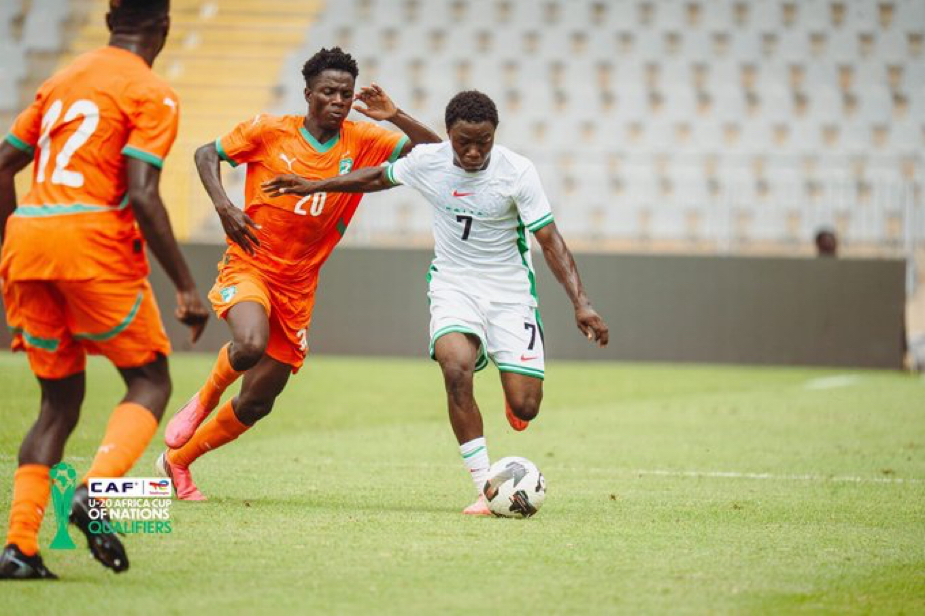
Perhaps the greatest warning sign is the decline of Nigeria’s junior teams. The Golden Eaglets once terrified opponents around the world. Today, Nigeria has struggled even to qualify for some of the tournaments where it once expected to compete for the title.
That should be unacceptable.
The answer is not simply to gather hundreds of young players at open screening camps shortly before a tournament. Nigeria needs year-round scouting, regional development centres, qualified youth coaches, proper competitions and systematic player monitoring.
The country must also confront the problems surrounding age-grade football administration. Selection should be based on ability, potential and development—not connections, inducement or political influence.
If the foundation is weak, the senior national teams will eventually pay the price.
Women’s Football Must Receive Equal Seriousness
The Super Falcons’ failure is perhaps the clearest evidence that even Nigeria’s traditional areas of strength can no longer be taken for granted. The Falcons dominated African women’s football for decades, but dominance cannot survive on history alone.
Women’s football requires sustained investment, professional league structures, proper facilities, medical support, player welfare and strong youth pathways.
Nigeria cannot celebrate the Falcons when they win and then neglect the structural issues affecting women’s football when they struggle. The same applies to the Flamingos and Falconets. Their development must be treated as part of a national strategy, not merely as tournament-by-tournament projects.
Reform Must Include Accountability.
Money alone will not solve Nigerian football’s problems
There must be transparency in how football funds are received and spent, clear performance indicators and accountability for those responsible for achieving results.
The NFF oversees senior national teams, youth teams and domestic football development, all of which require substantial financial resources. That makes transparency and proper financial management even more important.
The forthcoming NFF elections should therefore not be reduced to another contest for positions. The real question should be: What is each candidate’s plan for rebuilding Nigerian football?
Nigeria needs administrators who can present measurable programmes for grassroots development, coaching education, youth football, women’s football, domestic competitions and national-team performance.
The Political Dimension Cannot Be Ignored
Football administration cannot be allowed to become another arena for political patronage. This does not mean that government should interfere with technical decisions or violate the autonomy required by international football bodies. It means that Nigeria must create a professional governance structure where competence, transparency and performance matter more than personal alliances.
Calls for broader stakeholder participation in football governance have already emerged, with advocates arguing that the interests of players, coaches, referees, supporters, league representatives and other stakeholders deserve stronger representation. That conversation deserves serious consideration.
This Is the Moment to Act
Nigeria should not wait for another qualification failure before acting. The country has already received enough warnings.
The Super Eagles have missed consecutive World Cups. The Super Falcons have now lost their historic World Cup qualification streak. Nigeria’s once-dominant junior teams have suffered repeated setbacks.
These are not three unrelated problems. They are three parts of the same problem.
Nigeria must therefore embark on a comprehensive football reform programme—one that separates football development from short-term politics, strengthens the NFF, professionalises administration, rebuilds grassroots structures, improves coaching and scouting, protects players’ welfare, and establishes a coherent technical philosophy from the youngest national teams to the Super Eagles and Super Falcons.
The country still possesses extraordinary football talent. What is missing is a system capable of consistently converting that talent into success.
Nigeria does not need another temporary rescue operation.
It needs football reform. And the time to begin is now.
By Lehan Sowande, Abuja













Niger need reorganization totaly all the segment of football.
The youth use to produce talented and good players, all that is history now.
You have too many academy football all over but again cheat of age corruption is the bane of all.
To get it right, let a capenter be and let electeicibe a farmer be, I mean get people employ by their area of professional ability, not by influence or otherwise.
We have corrupted men and women even flowers and trees.
NFF must be honest enough in their duty and stop quoter tribal an dwhat have you.
Nigeria is power house politics in the world circle of football the corruption tribal regional influence has terminated all our command and respect we use to have in football.
We may not know or be surprised that the NFF are owing our player till date another source of most of our failures.
Why are there no check and balance or no audit, they may have bought over too by corrupting them too or corrupted before.
I hat no one nor do I have personal thing against anyone but truth to be told we re now growing backward at home and internationally.
Sit down praying will never do us any good but change our attitudes in all ramifications.
Good morning