


Line-ups
Nigeria
Formation: 4-4-2
Starting XI: 1 M. Okoye, 25 K. Akpoguma, 6 L. Balogun (C. Awaziem 57’), 22 K. Omeruo, 12 Z. Sanusi (J. Collins 66’) – 11 S. Chukwueze (C. Ejuke 78’), 13 S. Ajayi, 18 A. Iwobi, 15 M. Simon – 14 K. Iheanacho 7, A. Musa (Captain) (C. Dessers 72’)
Substitutes: 21 T. Ebuehi, 4 F. Onyeka, 16 D. Alampasu, 9 P. Onuachu, 20 C. Awaziem, 3. J Collins, 26 C. Dessers, 24 C. Ejuke, 10 M. Agu, 2 O. Aina, 19 S. Tijani, 23 M. Yakubu,
Tunisia
Formation: 4-2-3-1
Starting Eleven: 1 F. Ben Mustapha, 20 M. Drager, 6 D. Bronn, 4 Y. Meriah, 5 O. Haddadi – 19 A. Ben Mohamed, 17 E. Skhiri -24 H. Rafia, 25 A Slimane, 7 Y. Msakni (Captain), – 10 W. Khazri
Substitutes: 14 M. Ben Amor, 22 M. Ben Cherifia, 28 B. Ben Said, 18 S. Bguir, 16 A. Dahmen, 11 S. Jaziri, 9 I. Jelassi, 2 W. Kechrida, 15 A. Khalil, 12 A. Maaloul, 23. N. Sliti, 3 M. Talbi
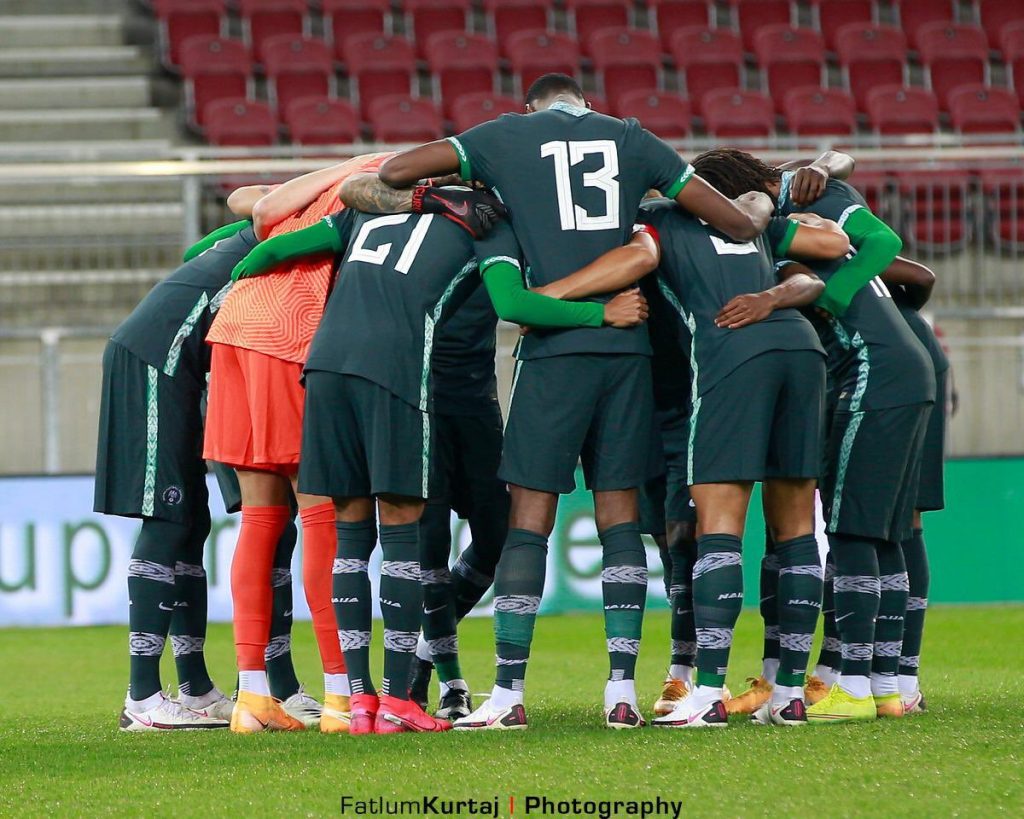
It was another difficult night for the Super Eagles as they were held to a 1-1 draw with Tunisia.
The last meeting between the two was in last year’s Africa Cup of Nations which Nigeria won 1-0 to claim the tournament’s bronze medal.
Last night, a victory could not be repeated as a missed penalty from Iheanacho (and what would have been his second goal on the night) saw Nigeria miss out on an opportunity to extend their 1-0 lead before Tunisia’s Mohamed Drager equalised just before half time.
Tactics
System and Personnel Changes
For this match, Gernot Rohr moved away from 4-2-3-1 to 4-4-2. This change was most likely prompted by the need to be more threatening in the final third after a rather flat offensive display in their previous match.
This change in system also came with a few personnel changes:
-Musa was used in the place of Onuachu; this provided Nigeria with more pace in attack and allowed them to be more threatening in behind the oppositions back four.
-Iheanacho started this match in a second striker role — a move which saw Iwobi drop into center midfield and leave Oneyka on the bench.
-Moses Simon came in for Kalu who had been given permission to travel back to his club.
-Omeruo was used instead of Troost-Ekong who was also given permission to leave.
-Akpoguma came in at the right back position for Ebuehi.
H&B GLOBAL SPORTS – FIRST-CLASS FOOTBALL CONSULTANCY, SCOUTING
Open Play
Nigeria’s tactics involved taking advantage of the more creative and attacking player’s that they included in the team.
They tried to penetrate the opposition’s back four by finding Ahmed Musa who made dangerous runs in behind with his pace. This worked especially well in one occasion that saw him win a penalty.
They were also encouraged to use the technique and creativity of player’s like Iwobi and Iheanacho, as well as the directness of Chukwueze and Simon to cause trouble for the opposition’s defence.
Their style of play was very direct as they transitioned through either long passes to Iheanacho and Musa (who tried to stretch the oppositions back four with his pace) or through the carrying of the ball by their wide midfielders Simon and Chukwueze.
There was also more offensive involvement from their central midfield and fullbacks.
Unlike their last match where two defensive holding midfielders were used, a midfield partnership of Alex Iwobi and Ajayi allowed for more offensive capabilities.
The former was given the license to move further up the field while the other stayed back to defend. This however also affected the team negatively on defence.
Defensively, Nigeria employed their usual medium block, but without being as defensive as they were in the last match.

The use of Alex Iwobi as a central midfielder allowed him to move forward into the half-space, which was usually triggered by Iheanacho making a forward run to join Musa.
As much as this allowed for creativity, it exposed the back four on a several occasions, with one occasion in particular leading to Tunisia’s equalizing goal—Iwobi’s eagerness to always attack and lack of good defensive expertness saw him out of position for Tunisia’s equalizing goal.
Set-Pieces
The Super Eagles played in-swingers for corners and long distance free kicks, with Chukwueze taking the set piece from the right and Moses Simon taking them from the left.
There were also no short passes used or any second man checking to the ball, as every set piece was played long. Playing out the back on goal kicks was completely avoided.
Defensively, they continued with their mix of zonal and man marking.
Offensive and Defensive Positioning
Offensively, Iwobi had the license to roam forward and move into the space that Iheanacho vacated. Even then Iheanacho always had the more slightly withdrawn role of the two strikers. Everybody else’s positioning was pretty standard.
At the other end of the pitch, everybody except Musa usually dropped back to defend. It was Musa’s job to stay up and use his pace to help counter. This is not uncommon for the striker of any team and is usually the tactic that is used.
Team Performance
Overall, this was an improved performance from the Super Eagles when compared to the last game against Algeria, but still full of inconsistencies and forced passing.
Nigeria took a lot more shots on goal and were generally more threatening (one of the effects of this was the opposition picking up 5 yellow cards), but this seemed like it was more due to the number of attacking minded players used as opposed to an established philosophy or a glimpse into any future consistency.
On the night, Nigeria were still not good enough in possession; they are still not able to stamp their authority on matches and take control by making quick, consistent, and accurate passes.
They were always in too much of a hurry to send the ball to Ahmed Musa, a tactic which would have been more effective if they were more patient and purposeful in their passing and build up play.
Notable Individual Performances
Kelechi Iheanacho
Iheanacho put on a technical, but flawed performance. He scored the Super Eagles only goal with a great turn and finish after receiving a flicked on pass from Ahmed Musa.
When he later had the chance to put his team two goals ahead with a penalty, he hit a tame shot that allowed the goalkeeper to make a comfortable save.
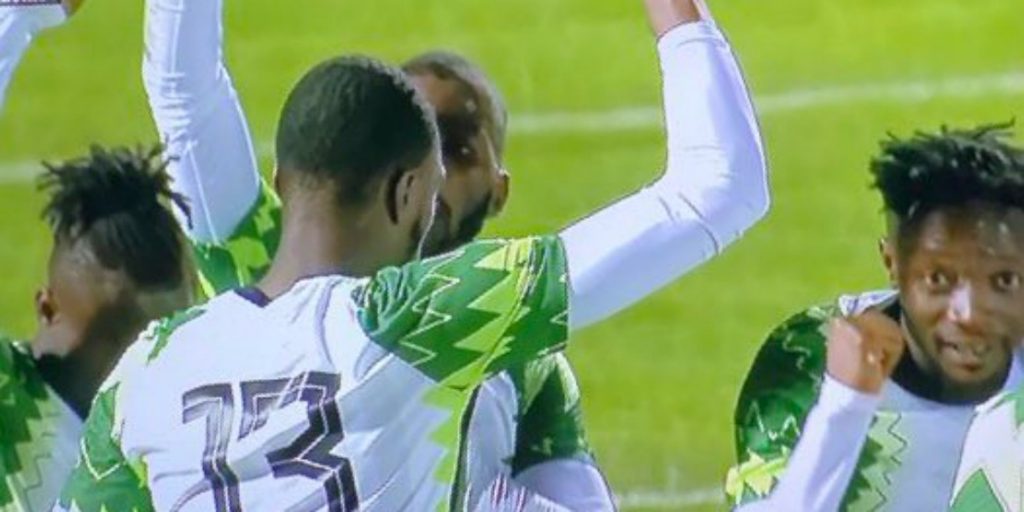
Moses Simon
He was very good in the first half as he helped transition the ball with his dribbling and direct play.
He also sent in some very inviting crosses and was assured on the ball.
When the second half came, he was much less involved. His biggest mistake of the game was his contribution Tunisia’s equaliser. He did not track the run of Mohamed Drager who sprinted past him and tapped in the goal.
Alex Iwobi
The midfield of a team needs to bring stability and even though Alex Iwobi tried to contribute in attack, his poor defensive ability saw him out of position and not put in a tackle on several occasions.
For the goal that was scored against Nigeria in the 44th minute, he was so out of position that as Ajayi tried to cover for him, he left his spot vacant and allowed the Tunisian Drager to run into it and score.
Ahmed Musa
He did well to assist Nigeria’s first goal with a skillfully flicked pass to Iheanacho and to win a penalty with great movement. He also did well to stretch the opposition’s defence with his speed.
Chidera Ejuke
With the 15 minutes he had on the pitch he was able to be dangerous just about every time he touched the ball and went on a lot of dazzling dribble runs. He is definitely one to watch.
What We Learnt
-Iwobi will likely be liability if played as a center midfielder again, especially against stronger opposition.
-Chidera Ejuke is one for the future. In the few minutes that he played, he showed great dribbling ability and directness.
-Nigeria still does not know how to rotate its player’s effectively. There is still a lot of chopping and changing in formation and the roles of players.
Gernot Rohr has been coaching the team since 2016, and they are still to establish a core structure in the team.
The performance was improved on the night, but even with the more attacking line up and adjusted formation and tactics, Nigeria still did not win the match.
When all is said and done, it is still not good enough and there is still a long way to go even after four years of rebuilding.
By Adeyanju Abiodun,
H&B Global Sports





How does the match analysis reveal the Super Eagles’ overall performance, and what makes Iheanacho’s goal particularly noteworthy in comparison? Regard Telkom University