You’d be hard-pressed to find a national team coaching position that’s been as volatile as that of the Nigerian men’s team.
Following the five-year spell of Gernot Rohr, Nigeria appointed Augustine Eguavoen in December 2021 as the interim coach, lasting just three months before making way for José Peseiro following their failure to qualify for the 2022 FIFA World Cup.
Peseiro was able to steer the ship in the right direction and enjoy two fairly promising years at the helm, but he was often criticized by fans and journalists for his defensive tactics.
And after relinquishing a lead and losing to hosts Cote d’Ivoire in last year’s AFCON Final, the Portuguese manager was dismissed.

Finidi George was then given the reins and oversaw a 1-1 draw to South Africa and a 2-1 defeat to Benin in World Cup qualifying, before being replaced by Eguavoen in June 2024.
Eguavoen’s second spell got off to a strong start with Nigeria beating Benin 3-0, but their following four league fixtures would see them score a total of three goals. After being held to a 0-0 draw at Rwanda, Nigeria bounced back by defeating Libya 1-0 before drawing 1-1 at Benin and losing 2-1 to Rwanda at home.
The writing was on the wall: Nigeria needed a new manager. They decided to appoint Éric Chelle, who became their fifth new coach since the start of 2022.
Born in Abidjan, Cote d’Ivoire, to a French father and a Malian mother, Chelle played for various French clubs between 1998 and 2014 and also racked up five appearances for Mali’s senior team before hanging up his boots.
He quickly transitioned into management with parochial French sides GS Consolat, FC Martigues and Boulogne before taking the reins of Mali’s senior team. Chelle enjoyed a seamless transition into international coaching, with Les Aigles winning four of their first six official matches, before heading back to his birth country of Cote d’Ivoire for the Africa Cup of Nations.
Chelle’s Mali side kicked off their campaign with a 2-0 victory against South Africa before drawing with Tunisia, whilst the following match saw them edge Burkina Faso 2-1.
But just when they looked set to mark their spot in the AFCON semifinals, Cote d’Ivoire equalized in the 90th minute via Simon Adingra to force extra time – a half-hour later, Oumar Diakité scored in the 122nd minute to complete the comeback and narrowly avoid a penalty shootout.
Such a dramatic collapse clearly took its toll on his players, who fell to a 2-1 defeat to Ghana and a 0-0 draw at Madagascar in June, after which Chelle was relieved of his duties.
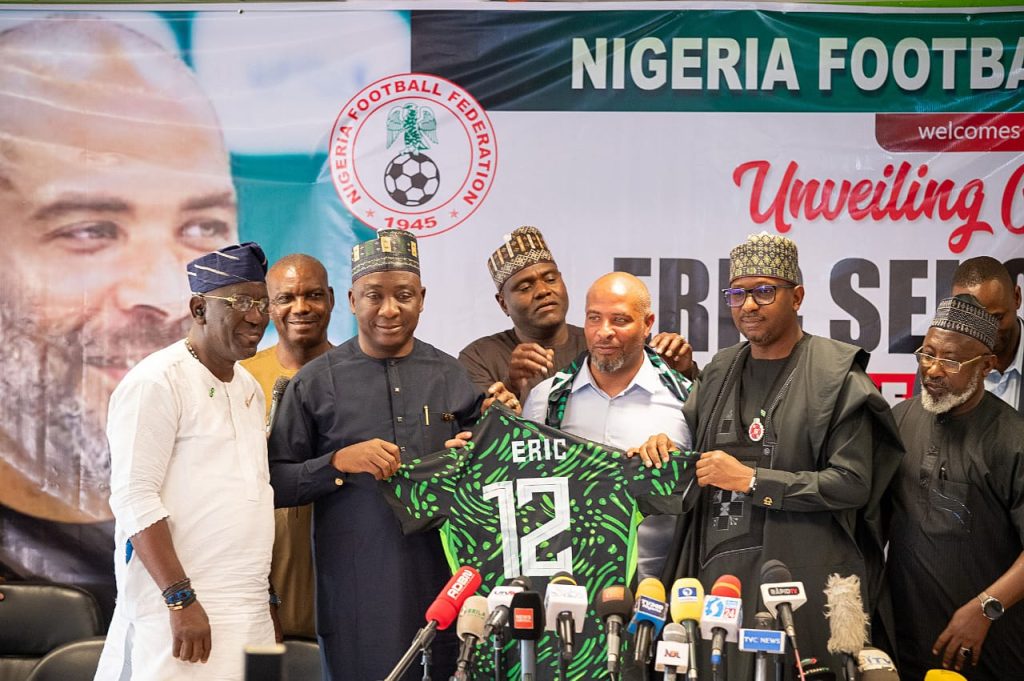
The 47-year-old then spent two months in charge of Algerian side Oran before deciding to return to international management and become Nigeria’s newest manager in January 2025.
“I don’t have any problem with Chelle’s appointment and I have to commend him for taking the job and accepting the conditions and demands,” stated Super Eagles legend Mutiu Adepoju.
“Not all coaches would want to take a job where you’re not sure whether you’re going to qualify for the World Cup.”
“He’s a brave guy and I want to believe that he’s going to try his best.
“We have produced many top-level domestic coaches like Stephen Keshi, who won the 2013 AFCON and qualified us for the 2014 World Cup. We’re not patient enough to give Nigerian coaches the opportunity to demonstrate how good they are, but we’ve had some of them who are working outside the country and doing very well,” added Adepoju, who won the 1994 AFCON and led Nigeria to their first World Cup that same year.
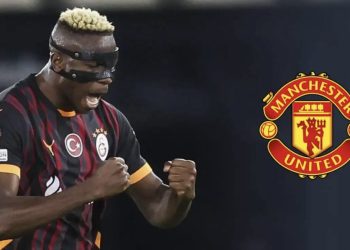
Chelle’s first trial came in Kigali against Rwanda; Victor Osimhen opened the scoring after 11 minutes before doubling Nigeria’s lead before the break in a 2-0 victory.
The Galatasaray striker added to his tally in the following match and broke the deadlock in the 74th minute in Uyo, but just when Nigeria looked set for a victory, Tawanda Chirewa equalized at the last second for Uganda.
With just four matches remaining, Nigeria sit fourth in their World Cup qualifying group, one point behind Benin and Rwanda and six behind South Africa, as well as one point above Lesotho and three above Zimbabwe.
Whilst South Africa will likely automatically qualify to the 2026 FIFA World Cup as the first-placed team in Group C, the Super Eagles find themselves in a heated contest as they look to finish second in their group and qualify for the playoffs.
These four remaining qualifiers will take place in September and October, with Nigeria hosting Rwanda and traveling to South Africa and Lesotho before hosting Benin in their final match.
By Zach Lowy